Galápagos National Park rules for visitors, including the 2026 update
The Galápagos are a national park and a marine reserve, and the rules are enforced: you visit park sites only with an authorised guide, keep 2 m from animals and follow the hours. The park's 2024 resolution sets out the rules below; the government adjusted them again in late August 2026.
By the Galápagos Boat Tours editorial team · Updated 24 Nov 2026 · Facts checked 24 Nov 2026 · Tour prices and ratings from GetYourGuide, checked 24 Nov 2026
On this page
The core rules
From the national park’s Resolution 0000007 of 29 January 2024:
| Rule | What it means for you |
|---|---|
| Visits only with a guide qualified and authorised by the park, except free-access sites for residents 1 | Every boat tour and landing comes with a naturalist guide |
| At least 2 m from animals, including your camera 2 | Even when a sea lion swims up to you, back off |
| No flash; commercial filming and drones need authorisation 3 | Phone and camera photos are fine without flash; drone permits take time 4 |
| Visiting hours 06:00–18:00; diving ends 17:00; night dives only at designated sites, 18:00–22:00 5 | Tours plan around these hours |
| Sunscreens with oxybenzone, octinoxate and other harmful chemicals are restricted 6 | Use a mineral product; better still, cover up |
| No jet skis, submarines or aerial tourism 7 | No jet-ski or scenic-flight add-ons |
| Camping only at permitted sites with 48 hours’ notice to the park 8 | Not something day visitors need |
| No alcohol, smoking or fires in the protected area; no speakers; take nothing (sand, shells, coral, rock); bring in no seeds, plants or animals 9 | Clean your shoes and bags between islands |
The 2026 update
In late August 2026 the Ministry of Environment adjusted the visit rules, and the park publicised them in September. According to the press report, the rules keep mandatory guiding and authorised operators only, set minimum distances by activity, ban touching and feeding animals, require prior authorisation for drones, remote cameras and underwater equipment, and ban publishing material obtained without authorisation 10. The full legal text is not online yet; check galapagos.gob.ec before you bring professional equipment.
Why the rules matter
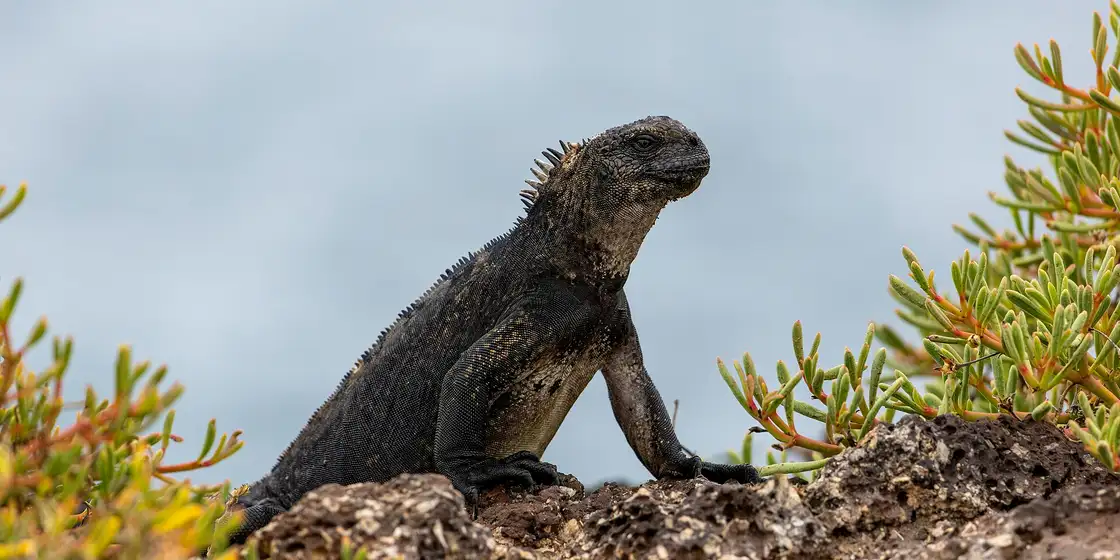
The islands hold more than 45 endemic bird species, 42 of reptiles, 15 of mammals and 79 of fish, as the park reported in 2026 11. Animals here are not afraid of people, which is exactly why the distance rule exists.
Choosing an operator that respects them
- Ask the operator to confirm that the guide holds a park licence.
- Good operators brief you on the rules before landing and before snorkelling.
- Walk away from any offer to feed, touch or chase animals, or to land without a guide.
We earn a commission if you book through our links to GetYourGuide, Viator or Trip.com, at no extra cost to you. It never changes our ranking. How this works · How we choose
-
North Seymour seabird walk and snorkel
North Seymour with free cancellation · Puerto Ayora, via the Itabaca Channel · 1 day · In the water: snorkel in a calm bay
Snorkel stop after the walk; the listing mentions green turtles.
See prices and dates on GetYourGuide 4.4 (14 reviews on GetYourGuide) from $483 per person checked 24 Nov 2026 See today's price and rating on GetYourGuide -
Santa Fe snorkel day with sea lions
Best overall day tour · Puerto Ayora (Santa Cruz) · 7 hours · In the water: snorkel in a calm bay
Snorkel in the sheltered bay of Santa Fe with sea lions.
See prices and dates on GetYourGuide 4.6 (90 reviews on GetYourGuide) from $219 per person checked 24 Nov 2026 See today's price and rating on GetYourGuide
Questions people ask
Can I fly a drone in the Galápagos?
Only with authorisation from the national park. The Charles Darwin Foundation advises asking at least two months ahead. Since the 2026 update, publishing footage obtained without authorisation is also banned, according to press reports.
Can I visit park sites without a guide?
No, except sites designated as free access near the towns. Every boat tour includes an authorised naturalist guide.
What sunscreen can I use?
The park restricts sunscreens containing oxybenzone, octinoxate and other harmful chemicals. Bring a mineral, reef-safe product and a long-sleeved swim top.
Keep planning
-
 Park fee and TCTThe Galápagos entry fee in 2026: US$200 for foreign adults, US$100 under 12, who pays less, the transit control card (TCT) online, documents and cash or card.
-
 Boat safetyStaying safe and comfortable on Galápagos boats: calmest and roughest trips, the 2022 and 2026 accidents, life jackets and seasickness tips.
-
 Best day toursThe best Galápagos day tours from Puerto Ayora, San Cristóbal and Isabela, ranked with live ratings and prices, what you do in the water and who should skip each one.
-
 CruisesAn independent guide to Galápagos cruises: what a liveaboard gives you, cruise-only islands, the cruises you can book online, last-minute deals and how to book.
Sources for this page
- Galápagos National Park Directorate: Resolution 0000007 (visitor rules), 29 January 2024: “Las visitas a las áreas protegidas de Galápagos sólo pueden efectuarse en compañía de un Guía especializado, calificado y autorizado por la Dirección del Parque Nacional Galápagos” Resolution of 29 Jan 2024 · checked 24 Nov 2026.
- Galápagos National Park Directorate: Resolution 0000007 (visitor rules), 29 January 2024: “Mantener una distancia no menor a dos metros de los animales, incluidos sus equipos de fotografía y filmación” Resolution of 29 Jan 2024 · checked 24 Nov 2026.
- Galápagos National Park Directorate: Resolution 0000007 (visitor rules), 29 January 2024: “Tomar fotografías sin flash ... Filmaciones, fotografías profesionales con fines comerciales y el uso de equipos de fotografía aérea (drones) requieren autorización de la Direcc…” Resolution of 29 Jan 2024 · checked 24 Nov 2026.
- Charles Darwin Foundation: Galápagos National Park rules for visitors: The Charles Darwin Foundation advises asking the National Park for a drone or professional filming permit at least two months in advance. Checked 24 Nov 2026 · secondary source.
- Galápagos National Park Directorate: Resolution 0000007 (visitor rules), 29 January 2024: “de 06h00 a 18h00 , salvo las actividades de buceo que terminará 17h00 ... El buceo nocturno permitido en los sitios definidos en la normativa correspondiente, tienen un horario…” Resolution of 29 Jan 2024 · checked 24 Nov 2026.
- Galápagos National Park Directorate: Resolution 0000007 (visitor rules), 29 January 2024: “se regula y restringe el uso de protectores, bloqueadores y filtros solares que contengan elementos químicos como la OXIBENZONA , OCTINOXATO” Resolution of 29 Jan 2024 · checked 24 Nov 2026.
- Galápagos National Park Directorate: Resolution 0000007 (visitor rules), 29 January 2024: “Las actividades con vehículos acuáticos motorizados, el uso de submarinos y el turismo aéreo no están permitidos.” Resolution of 29 Jan 2024 · checked 24 Nov 2026.
- Galápagos National Park Directorate: Resolution 0000007 (visitor rules), 29 January 2024: “Se deberá solicitar una autorización con 48 horas de anticipación en las oficinas de la Dirección Parque Nacional Galápagos” Resolution of 29 Jan 2024 · checked 24 Nov 2026.
- Galápagos National Park Directorate: Resolution 0000007 (visitor rules), 29 January 2024: “No consumir alcohol , fumar y hacer fogatas dentro del área protegida ... Queda prohibido el uso de reproductores de sonidos tales como: radios, celulares, parlantes u otros.” Resolution of 29 Jan 2024 · checked 24 Nov 2026.
- Primicias: new visitor rules in the Galápagos National Park, 21 September 2026: “A finales de agosto de 2026 el Ministerio de Ambiente y Energía ajustó las normas de visita ... La filmación, fotografía profesional, uso de drones, cámaras remotas, equipos aér…”The full text of the 2026 rules is not online yet; the Park Directorate’s website (galapagos.gob.ec) is the place to look for it. Published 21 Sep 2026 · checked 24 Nov 2026 · secondary source.
- Primicias: new visitor rules in the Galápagos National Park, 21 September 2026: “Aquí se albergan más de 45 especies de aves endémicas , 42 de reptiles, 15 de mamíferos y 79 de peces” Published 21 Sep 2026 · checked 24 Nov 2026 · secondary source.